Overview
TAG-art.co.uk is my professional portfolio and content platform, built from concept to launch in one month through intensive design and development collaboration with Claude AI. The site serves as both a showcase for immersive media work and a content hub powered by an innovative AI-driven blog pipeline.
Developed with SEO-first principles, the platform underwent a comprehensive security audit post-launch and continues to evolve as an ongoing project. Hosted on Vercel with GitHub version control, the site demonstrates modern web development practices combined with creative experimentation.
Homepage Design
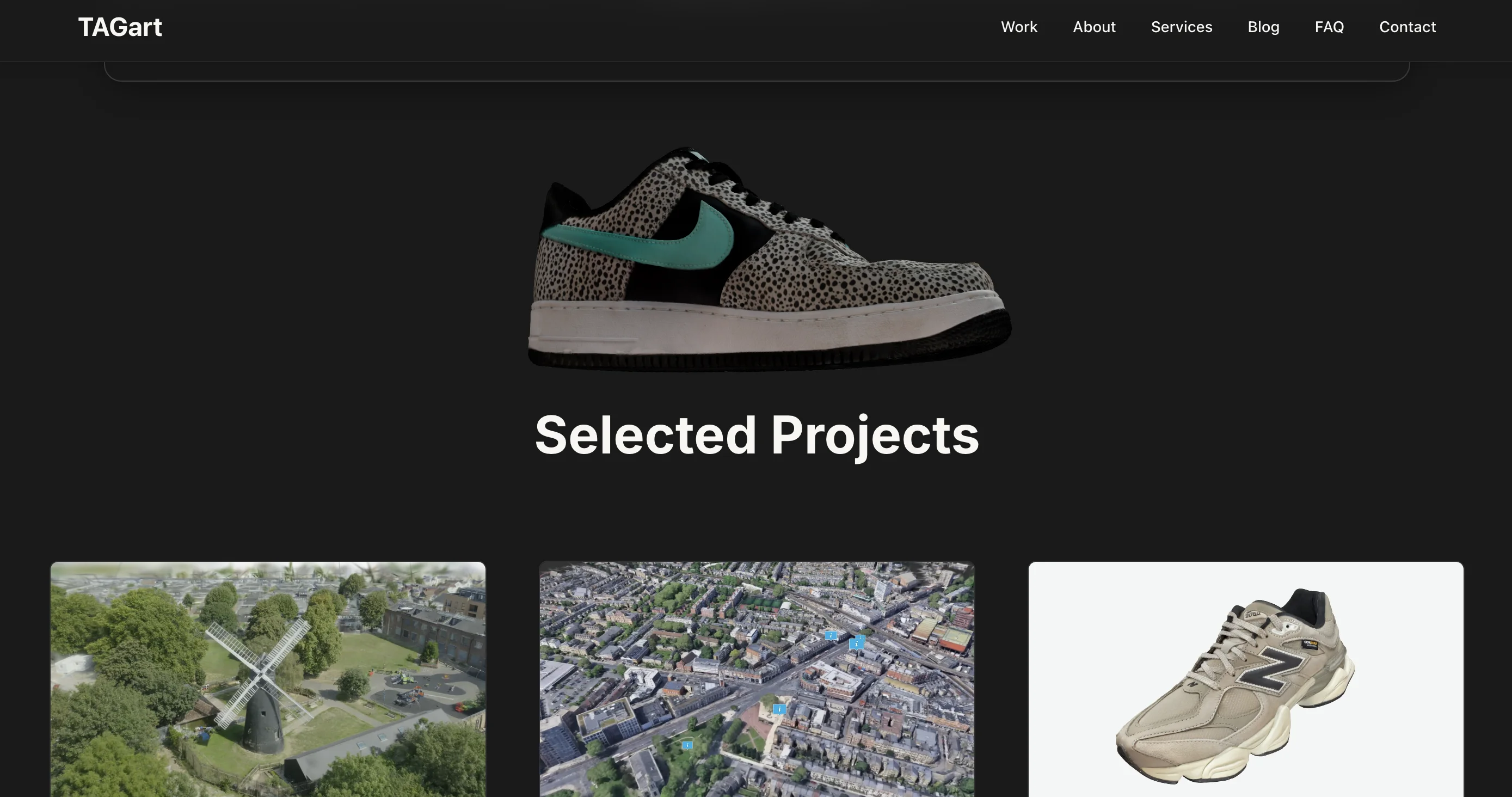
The homepage features an interactive photogrammetry shoe model (captured with Kiri Engine) rendered as the centerpiece. Glassmorphic UI sections layer over the 3D viewer, creating depth through frosted glass effects that reveal the blurred shoe beneath. Strategic blank space between sections allows the 3D model to remain visible, creating a continuous visual thread throughout the scroll experience.
This approach balances aesthetic impact with performance—the shoe loads efficiently while the glassmorphic layering provides modern visual appeal without heavy animation overhead.
AI-Powered Blog Pipeline
The blog system represents an innovative approach to content strategy, built with Antigravity AI. Rather than manual ideation, the pipeline began with agentic AI research analyzing long-tail keywords in the immersive media industry, identifying gaps where competitors weren't producing content.
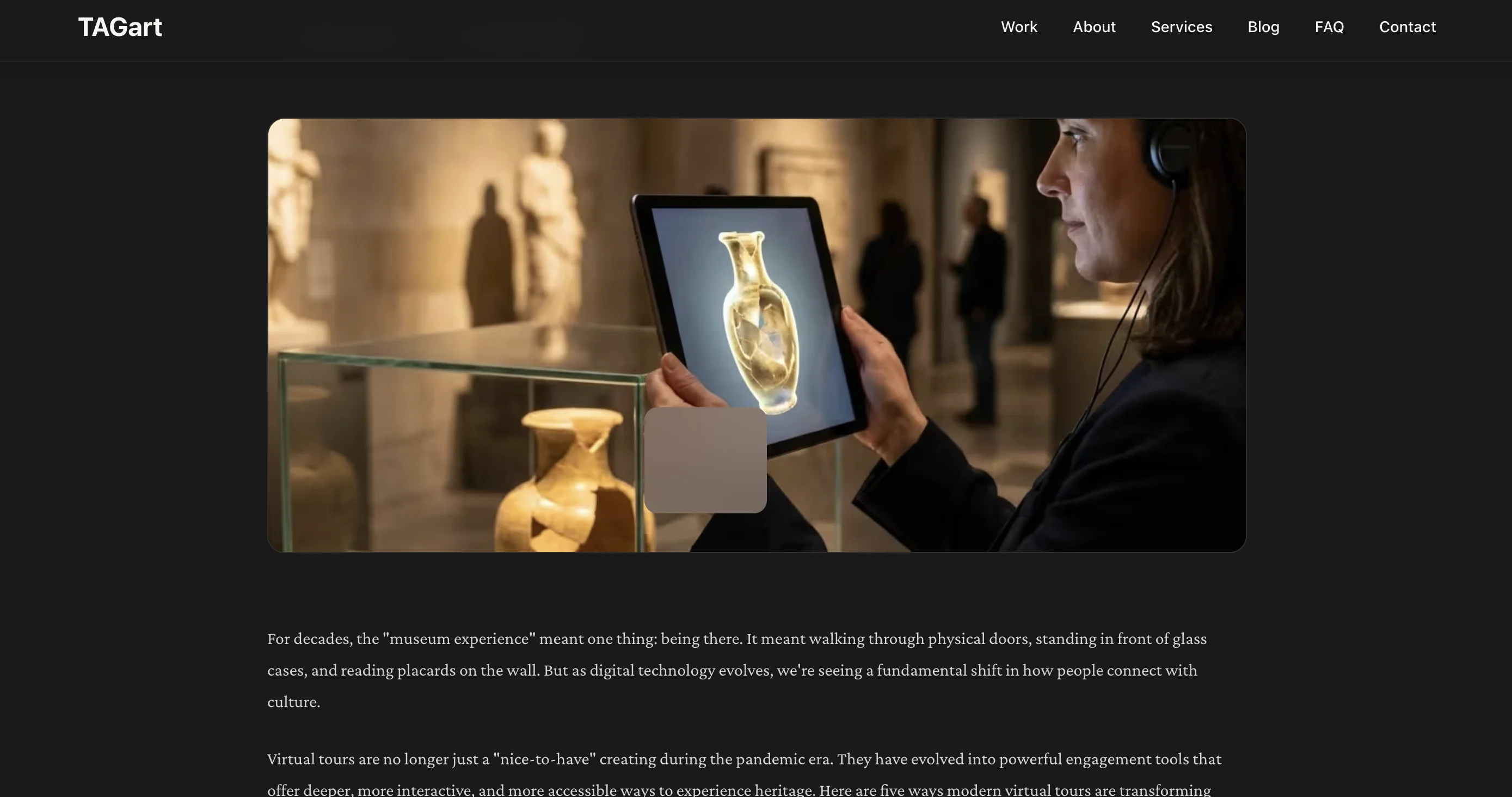
This research generated 10 strategically targeted blog posts, each written by AI and paired with AI-generated featured imagery. The publishing logic implements automated scheduled releases—posts go live on predetermined dates without manual intervention, creating consistent content flow.
This system demonstrates practical AI application: using technology not to replace creative direction, but to accelerate research, production, and deployment of strategic content at scale.
Key Features
SEO-First Architecture
Built with search engine optimization as a core design principle, targeting strategic keywords from initial conception.
Automated Content Pipeline
AI-researched keywords, AI-written posts, AI-generated images, scheduled publishing—content at scale without manual overhead.
Glassmorphic 3D Integration
Interactive photogrammetry shoe visible through frosted UI layers, creating depth and visual interest throughout scroll.
Security Hardened
Post-launch security audit identified and closed vulnerabilities, ensuring robust protection for user data and site integrity.
Vercel Deployment
GitHub version control with Vercel hosting provides instant deployments, edge optimization, and automatic SSL.
Iterative Development
Launched in 1 month, but designed as an ongoing project with continuous feature additions and refinements.
Site Showcase
Homepage: Photogrammetry Shoe with Glassmorphic Layers
Blog Overview Page
Mobile-Responsive Design
Blog Content System
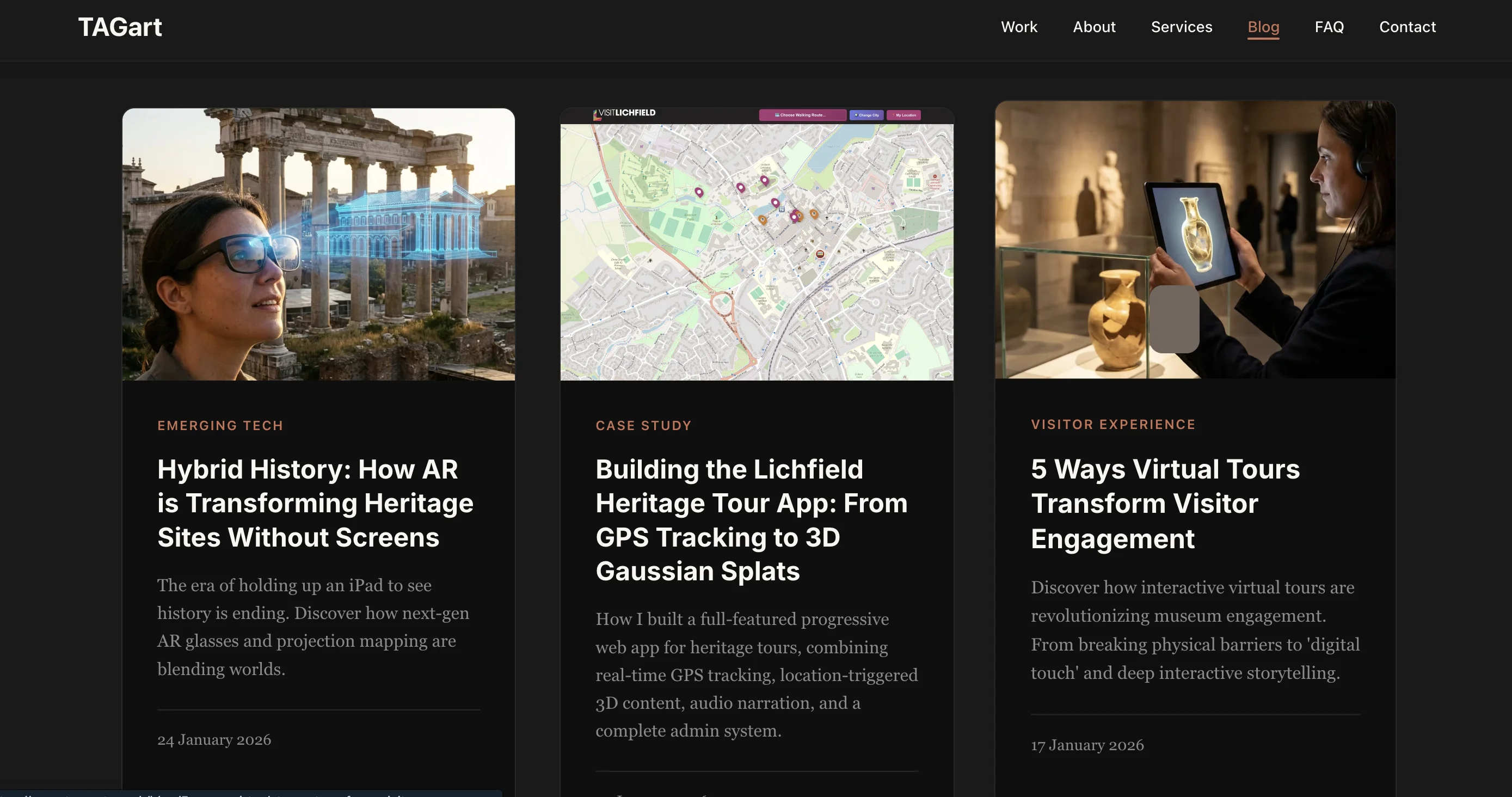
AI-Generated Content with Scheduled Publishing
Technical Implementation
Development Timeline: The site was built in a one-month sprint combining design exploration with rapid implementation. Claude AI served as primary development partner for the React architecture, component structure, and overall site build. Antigravity handled the blog content pipeline specifically.
Stack & Hosting: Built with React for component-based architecture, deployed on Vercel for edge optimization and instant deployments. GitHub provides version control and collaborative workflows. The photogrammetry shoe was processed through Kiri Engine before web integration.
SEO Strategy: Rather than retrofitting SEO after launch, the entire site architecture was designed with search optimization as a core principle—from URL structures to content hierarchy to metadata implementation.
Security: Post-launch security audit reviewed authentication flows, data handling, and potential vulnerabilities. Recommendations were implemented to harden the platform against common attack vectors.
Ongoing Development: While functional at one month, the site is treated as a living project. Features, content, and optimizations continue to be added based on usage patterns and strategic priorities.